Translate

Sunday, January 27, 2013

Augustinian Mistake

We know that Augustine spent some nine years amongst the Manichean communities. Due to the failing powers of clairvoyance that happened upon humanity at that time, our old friend Augustine was unable to experience the Divine in the Natural world and assumed that the Manicheans were just inclined to worship the material world rather than the Divine as manifested in it. This led to a misunderstanding of Manichean dualism.

Rudolf Steiner speaks of this in his lecture The Bridge between the Ideal and the Real:

Augustine passed through the impressions of the most diverse world views.... Above all, he passed through Manicheism and Scepticism. He had taken all those impulses into his soul which one gets if on the one hand one looks at the world and sees everything as ideal, beautiful and good, all that is filled with wisdom- and then, on the other hand, sees all that is evil.

Now we know that Manicheism tries to reconcile these two streams in the cosmic order by assuming an eternal polarity, an everlasting dualism, between darkness and light, evil and good; that which is filled with wisdom and that which is filled with evil.
Manicheism comes to terms with this dualism in its own way, only by uniting certain old pre-Christian basic concepts with its acceptance of the polarity of world-phenomena. Above all, it unites certain ideas which can be understood only when one knows that in ancient times the spiritual world was perceived by humanity in atavistic clairvoyance, and perceived in such a way that the content of the visions resembled in appearance the sense perceptions of the physical world.
 Now, because Manicheism took into itself such ideas of the physical 'appearance' of the supersensible, it thereby gives many people the impression that it is materializing the spiritual, as though it presented the spiritual in material form. That of course, is a mistake which more recent views of the world have made, a mistake even made by Theosophy [and by modern Spiritualism].

Augustine actually broke with Manicheism because in the course of his purified life of thought he could no longer bear this apparent materializing of the spirit.


As Augustine said:
"I fell among men who held that the light which we see with our eyes is to be worshiped as a chief object of reverence. I assented not: yet thought that under this covering they veiled something of great account, which they would afterwards lay open."

De Vita Beata. Pref.
Mani taught an essentially monistic system:

Quote:

"Manichaeism is a monistic system. For the Manichee, there is only one universe and it is man himself who has divided it into two: the perceptual and the conceptual. And it was within man himself that Mani sought a bridge between the world of the senses of the body, and the world of the spirit. 

He found it by integrating the senses of the body with the senses of the spirit in order to reveal within all terrestrial phenomena the spiritual reality which fashions and sustains them. In such a manner, Mani perceived that all human beings were themselves sun spirits. 
He taught his followers how to be reborn on the spirit and how to live in accordance with the life of Christ during his three years in a physical body on earth (that is, from the moment of the baptism in Jordan to the death on the cross at Golgotha.)"
-Trevor Ravenscroft

Thursday, January 24, 2013

All Earlier Religion was Water


Friedrich Rittelmeyer in his "Meditation" instructs us in the following:


"When the man of ancient times spoke of water, he did not think only of bathing or of sailing in a boat. He felt water to be religious. Water's power of purification was to him divine and worthy of veneration.
"In baptism still lives a remembrance of how man can dip into a purifying, revelation-bringing element. All laws and regulations about washing and purification are connected with this fundamental feeling. Man had above him a higher world which, through the water which it sent down from the heavens, received him again and again into its purifying forces.
"Instead of bathing, ancient man thought of religious purification, instead of sailing, he thought of crossing the stream after death or in initiation. The latter, the crossing of the stream, was the esoteric of ancient religions, the former, the purification, its exoteric. And so the old religious feeling lived with water. And when we notice the miserable remains of these feelings, that are still alive in men today, when they rejoice in water because of bathing and sailing, then we can perceive with our eyes what changes there have been."
"All earlier religion was water."
- Rittelmeyer
All initiates from the beginning of the Fifth Root-Race had taken over their traditions from the time of the Atlantean Race, when there was as yet no wine. The Indian, Persian and Egyptian initiates had no need of wine. What played a part in the sacred rituals was exclusively water.

-Rudolf Steiner

Wednesday, January 23, 2013

The Mughtasilah

The Moghtasilah/Mughtasilah (an Arabic name), were a group of  Judaising Christians. Mani's father had taken the boy at the age of four to live among this group. He remained with them until the age of twenty-four.

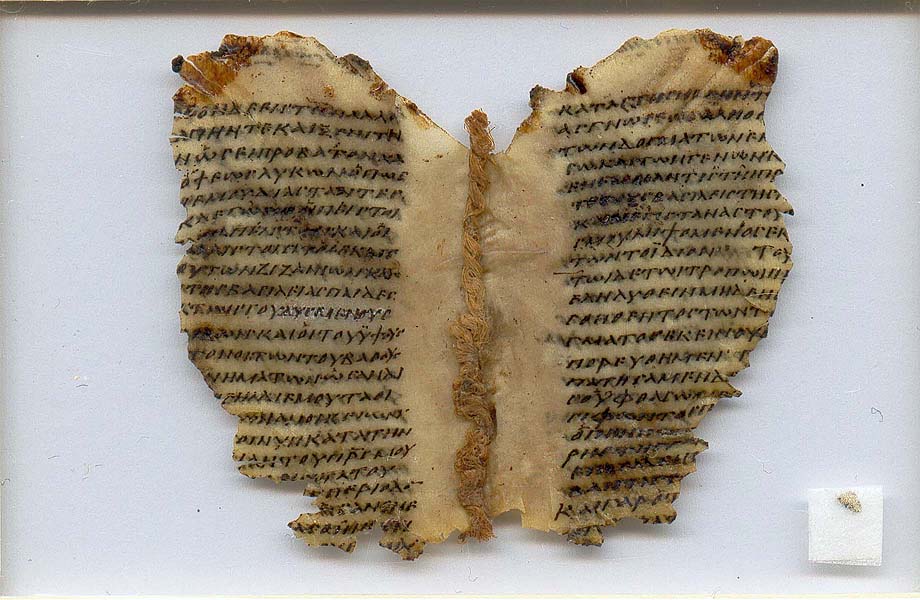
The mystery as to the identity of the Mughtasilah came to an end in 1970 when two German scholars deciphered a tiny Greek codex, the Codex Mainchaicus Colonienis - the smallest papyrus codex yet discovered, measuring only 3.5 X 4.5 cm. The codex describes the Mughtalsilah as Judaising Christians who followed Elchasaios. 


The Elcesaites, Elkasaites, Elkesaites, or Elchasaites, were vegetarians and the young Mani had to naturally assist in the harvesting of fruit and vegetables. 

The Mughtasilah practiced a communion of unleavened bread and water and practiced ritual ablutions. 'Mughtasilah' means, 'Those Who Wash Themselves'.

Reference: Samuel N. C. Lieu, Manichaeism: In the Later Roman Empire and Medieval China : a Historical Survey

The ritual bathing  was not just symbolic or of mundane
value. Rudolf Steiner spoke of how when one washes one's hands the astral body is also affected in the cleansing process- particularly if the intention is such.


It is also a fact that there are individuals who enjoy washing their hands as often as possible, and others who do not. Understanding of such an apparently trivial fact actually demands very advanced knowledge. To a clairvoyant the hands of a man are remarkably different in a particular respect from all his other bodily members. Luminous projections of the etheric body stream out from the fingers, sometimes glimmering faintly, sometimes flashing far into the surrounding space. The radiations from the fingers vary according to whether the man is happy or troubled and there is also a difference between the back of the hands and the palm.

For anyone able to observe clairvoyantly, a hand, with its etheric and astral parts, is a most wonderful structure. But everything in our environment, material though it be, is a revelation, a manifestation, of the spirit. You should think of matter as being related to spirit as ice is to water; matter is formed out of spirit — call it ‘condensed spirit’ if you like. Contact with any material substance means contact with the spirit in that substance. All our contact with anything of a material nature is in fact — to the extent that it is purely material — maya. In reality it is spirit with which we come into contact.

If we observe life with sensitivity, we shall realise that washing the hands — especially if it is done frequently — brings a man into contact with the spirit in the water and has a considerable effect upon his whole disposition. Some individuals have a great fondness for washing their hands; directly the least speck of dirt gets on their hands they must be washed! Such characters either have, or will develop, a very definite relation to their surroundings, a relation not entirely the outcome of material influences. It is as if delicate forces in matter were working upon such individuals when there is this relationship between their hands and the element of water. Even in everyday life you will find that these people have an entirely healthy kind of sensitivity and more delicate powers of observation than others. They are at once aware, for instance, whether someone standing near them has a brutal or a kindly disposition. On the other hand, individuals who do not mind their hands being dirty are actually of a coarser disposition and erect a sort of barrier between themselves and their environment. This is a fact and can actually be observed as being characteristic of certain groups. Travel through certain countries and observe their inhabitants. In regions where people tend to wash the hands more frequently, you will find that relations between friend and friend are very different from what they are in regions where people wash their hands less often and erect a sort of barrier between one another.

These things have the validity of natural law, though the details may be affected by various circumstances. If we throw a stone into the air the line of projection is a parabola; but if the stone is caught by a gust of wind there will no longer be a pure parabola. This shows that all the relevant facts must be known if certain relationships are to be accurately observed. As to the hands, clairvoyant consciousness reveals that they are permeated by soul and spirit — to such an extent, indeed, that a definite relationship of the hands to the water is established. This holds good less in the case of the human face and less still in the case of the other parts of the body. This must not, however, be interpreted as an objection to washing or bathing but rather that we must keep our attention fixed on the relevant circumstances.

The point here is to show how very differently the soul and spirit are related to and express themselves in the various parts of the body. You are not likely to find that anyone does harm to his astral body by washing his hands too often, but the point must be considered in its widest range. The relationship between hands and water may exercise a healthy influence on the relation between man and his surroundings, that is to say, between his astral body and his environment; and for this reason things will not readily be carried to extremes. But those who think materialistically and allow their thoughts to be attached solely to matter will say that what is good for the hands must be good for the rest of the body. This would show that differences depending on delicate perceptions entirely escape notice; the consequence -- and it is abundantly in evidence — is that for certain purposes the same treatment is applied to the whole of the body.

For instance, frequent cold baths and constant cold water frictions are recommended as a particularly effective treatment, even for children. Fortunately, because of obvious effects on the nervous system, doctors have already begun to realise that these treatments have been carried to absurd extremes. What is right for the hands because of their particular relation to the astral body can become an injurious experiment when applied to parts of the body having a different relation to the astral body. Washing the hands may bring about a healthy sensitivity to the environment; but an excessive use of cold baths and the like may cause an unhealthy hypersensitivity which, especially if such treatment is applied in childhood, lasts for the whole of life.


Monday, January 21, 2013

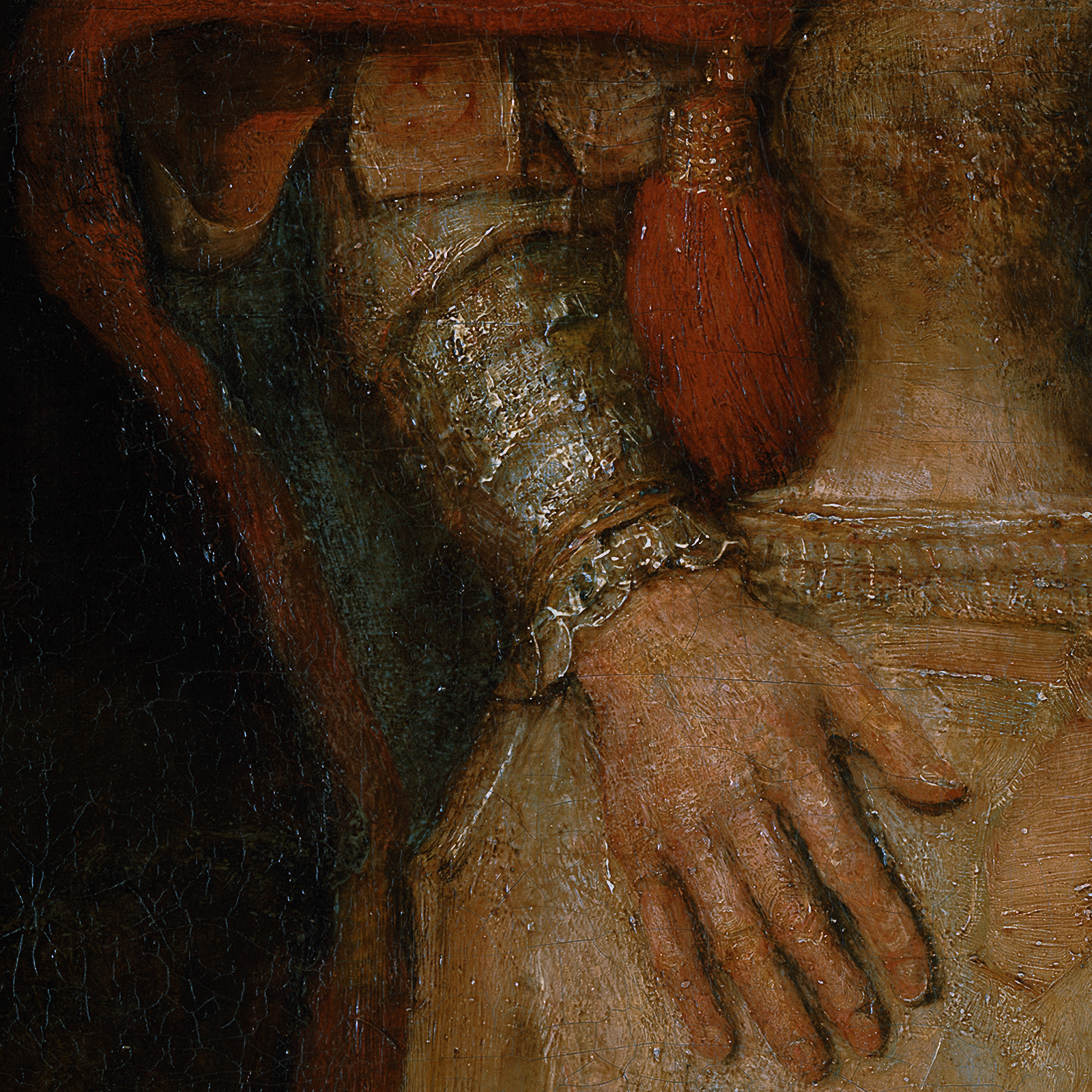
'Milde': Kindness, Gentleness

Rembrandt
Sergei Prokofieff defines the qualities of the Manichaen path:
"However, it is possible to prepare oneself for these future tasks of 'good humanity' already in our time. And the path to this is that of tolerance and forgiveness. Especially in the latter, we have real seeds of that process of 'moral breathing' which has been spoken of.

"For in every case where we have been subjected to evil we receive or, one could also say, spiritually 'inhale' it into ourselves in such a way that its consequences continue to work within our soul; while in an act of true forgiveness we firstly - through overcoming ourselves - transform these consequences into good and then send this good back into the world, spiritually 'exhaling' it, as it were, in order to give back to the world as much goodness and love as was taken from it as a result of the wrongful action.

"In his lecture on 'Manicheism', Rudolf Steiner particularly singles out that soul quality which in the German language is referred to as 'Milde' [kindness, gentleness] as the most effective moral instrument to enable the followers of Manes to wage the battle with the evil in earthly evolution. This word is not merely in its meaning but also through its etymological roots related to the word 'forgiveness' ('Verzeihen'). Even in ordinary life we quite naturally presuppose that a person to whose character we may apply the word 'mild' (gentle) is most likely to have a considerable capacity for forgiveness. (Moreover, gentleness in the truly Manichean sense is by no means a sign of soul weakness but a power of the mightiest kind, fully capable of transforming man's etheric body, ....)

"Etymologically, the German word 'mild' derives from the old High German 'milt', which means 'good', 'gracious', ..... brought about by the genius of language itself from 'forgetting' to 'goodness' and 'grace'; and it is such a 'bounteous forgetting' which arises in the human soul in the process of 'forgiveness' ('Verzeihen'), a word which derives from 'verzichten', which is in its turn associated with the notion of voluntary renunciation and, in a deeper sense, of voluntary forgetting.

"On the other hand, the word 'Milde' is related to that virtue which Parsifal had to develop on the path towards his Initiation. Wolfram von Eschenbach uses the word 'saelde' to refer to it, a word which is related to the Gothic 'selei', meaning 'goodness, gentleness', and also to the Anglo-Saxon 'swelig'-'fortunate', 'good', 'blessed' ('highly favored', 'blissfully happy').

"Developing within oneself 'saelde' means, therefore, creating the conditions in one's soul which can enable the cosmic Spirit to descend into our ego as the Spirit-Self, that is, that Spirit with whom Christ prophetically endows His Apostles when He sends them out into the world to forgive men in His name and remit their sins. Rudolf Steiner defines the word 'saelde' in the same sense as the 'life. . which pours forth spiritual knowledge over the consciousness soul' and through which alone .... human soul-development [can] make a really fruitful transition from the fifth epoch to the sixth.'

"Thus in the words 'Milde' and 'saelde' in their relationship to the principle of forgiveness we may discern the direction of the development which will in future lead to the founding of the true Manichean Mysteries amongst mankind."

-The Occult Significance of Forgiveness


Therefore gentleness/kindness, characterizes the Manichean approach.

Wednesday, January 16, 2013

Sons of the Widow

Isis suckling Horus

The above term has been applied to the Manicheans - what does it mean? Dr. Steiner indicated that the Young Man of Nain was a previous incarnation of Mani. That boy was the son of a widow. Hiram Abiff was also the son of a widow, so you also have the designation used by Masons. The phrase was on the lips of Mormon founder Joseph Smith before he died. "O Lord my God, O Lord my God, O Lord my God, is there no help for the widow's son?"

Earlier on in Egyptian times, Horus was the archetypal "Son of the Widow".

Edward Smith gives Rudolf Steiner's explanation here:

Quoted from the above:
Osiris and Isis, those are the two forces present in the soul: the instructor, representing the divine which flows directly into man, Osiris, he that is the father; the soul itself, Isis, the one who conceives, receives the divine, the spiritual into itself, she is the mother. 

During the Fifth Root Race [the present post-Atlantean] the father withdraws. The soul is widowed. Humanity is thrown back onto itself. It must find the light of truth within its own soul in order to act as its own guide. Everything of a soul nature has always been expressed in terms of the feminine.

Therefore the feminine element which exists only in a germinal state today, and will later be fully developed this self-directing feminine principle which is no longer confronted by the divine fructifier, is called by Mani the "Widow". And therefore he calls himself Son of the Widow. 

end of quote

Monday, January 14, 2013

Augustine the Manichean

One of those who struggled out of the character of that period toward an understanding of Christianity is to be seen in Augustine. In this Augustine we see a spirit who could no longer understand the ancient form of the conception of nature. You know that Augustine is said to have been a Manichean.
Augustine narrates this himself. But all that lies back of these things can no longer be rightly seen through by means of external thinking.
What Augustine called Manicheanism, what is called at present the teaching of Mani, is only the degenerate outcome of an ancient teaching which conceived the Spirit only as creative and knew no difference between matter and spirit. No spirit was existent that did not create and what it created was seen by the human being as matter. Just as little conception did these ancient times have of mere matter; on the contrary, spirit existed in everything.
This was something that Augustine could not understand. What Gnosis understood, and what was no longer understood later; what our own period does not at all understand, - this is true: no matter exists of itself; this was known by the Manicheans and they beheld the descent of Christ in the light of this view. Augustine could no longer make anything out of this; the time had passed, the possibility of making anything out of it, because the documents had been destroyed and the ancient clairvoyance had been blotted out.

Thus Augustine, after long intense superhuman struggle arrived at the decision that he could not of himself attain to truth, but must adjust himself to what the Catholic Church prescribed as truth: to submit himself to the authority of the Catholic Church. And this mood - consider it at first as a mood - remained, contained alive especially for the reason that thinking became ever more abstract. In reality it was only slowly and gradually that thinking was disabled.

-Rudolf Steiner, The Need for Understanding the Christ


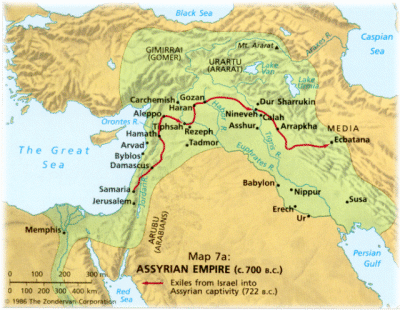
Ectabana

Mani was a "native of Ectabana". In central Iran, the modern name for the town is Hamadan- 400 km south west of Tehran. 

The tomb of the great Iranian scientist/philosopher, Avicenna, is in Hamadan. He was a vizier there - though much later than Mani (11C). 

The whole city was tribute to astrological knowledge - what a fitting place for Cubricus/Mani to be.


Astrological colors and jewels featured in the palace- the walls were colored after the planets.


Herodotus writes:
Deioces bade them build for him a palace worthy of the royal dignity and strengthen him with a guard of  spearmen. And the Medes did so: for they built him a large and strong palace in that part of the land which he told them [...].

He built large and strong walls, those which are now called Ecbatana, standing in circles one within the other. And this wall is so contrived that one circle is higher than the next by the height of the battlements alone. And to some extent, I suppose, the nature of the ground, seeing that it is on a hill, assists towards this end; but much more was it produced by art, since the circles are in all seven in number. And within the last circle are the royal palace and the treasure-houses.
 The circuit of the outer wall is very nearly the same with that of Athens. On this wall the battlements are white, of the next black, of the third scarlet, of the fourth blue, the fifth orange; all these colors with paint. The last two have their battlements coated respectively with silver and gold.

These walls then Deioces built for himself and round his own palace, and the people he commanded to dwell round about the wall.
[Herodotus, Histories, 1.98-99]


 Ectabana is also mentioned in the Bible- Ezra.

Then King Darius issued a decree, and search was made in the archives, where the treasures were stored in Babylon. In Ecbatana in the fortress, which is in the province of Media, a scroll was found and there was written in it as follows: “Memorandum— “In the first year of King Cyrus, Cyrus the king issued a decree: ‘Concerning the house of God at Jerusalem, let the temple, the place where sacrifices are offered, be rebuilt and let its foundations be retained, its height being 60 cubits and its width 60 cubits; with three layers of huge stones and one layer of timbers.

And let the cost be paid from the royal treasury. ‘Also let the gold and silver utensils of the house of God, which Nebuchadnezzar took from the temple in Jerusalem and brought to Babylon, be returned and brought to their places in the temple in Jerusalem; and you shall put them in the house of God.’